

The myth: "Migration is being cut, so sponsorship isn't worth it"
Here's the reality:
Australian employers can still sponsor skilled workers in 2026. For permanent employer-sponsored visas, there are more places this year, not fewer.
We keep hearing a version of the same line from employers: "Migration is being cut, so there's no point sponsoring anyone."
We understand where it comes from. Most of the headlines are about bringing overall migration numbers down, and the Government is doing that.
But overall migration and employer sponsorship aren't the same thing. If you're running a construction, resources, manufacturing or trade business, the settings that matter to you have moved in a different direction. Here's what has changed, what hasn't, and what I'd be doing now if I were planning a skilled workforce for the next 12 to 18 months.
What has actually changed in 2026
Three changes matter most for employers this year: more permanent employer-sponsored places, new processing priorities, and a higher salary floor.
1. More permanent employer-sponsored places
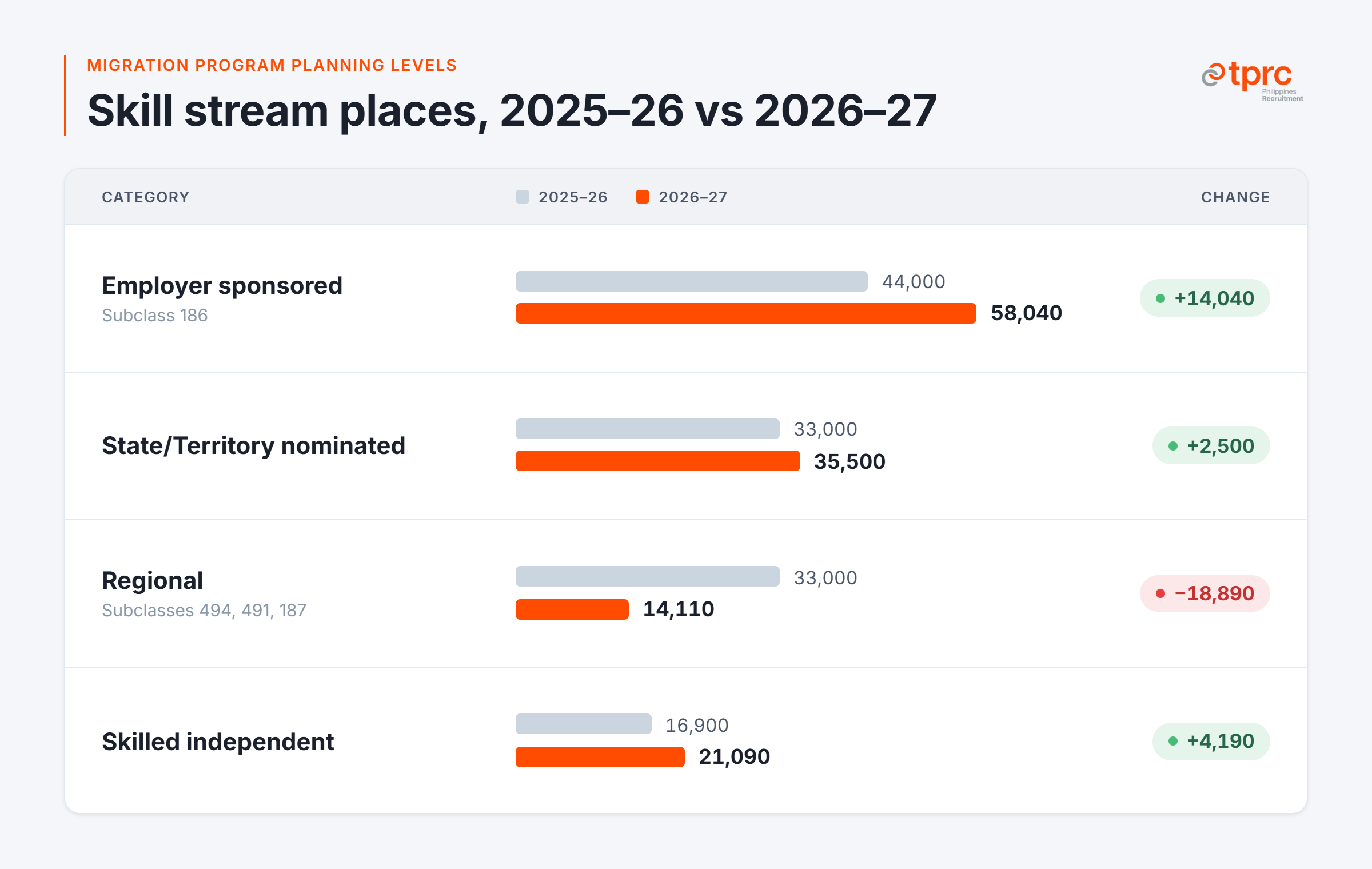
The 2026–27 Migration Program planning levels, released with the May 2026 Budget, shifted places toward employer sponsorship.
Source: Interstaff, citing Home Affairs planning levels
That's roughly a 32% increase in permanent employer-sponsored places, while regional places were cut by more than half. If you're weighing a temporary visa against a permanent one, we've covered the trade-offs in Choosing Between Temporary and Permanent Sponsorship and Employer-Sponsored Visas Explained: 482 vs 186 vs DAMA.
2. Priority sectors now go to the front of the queue
Since 19 September 2026, Ministerial Directions 121 and 122 set the order in which skilled visas are processed. They replaced Direction 119, which lasted 56 days. That's two changes to processing priorities in two months.
Applications in these sectors are now processed first, whether the worker is onshore or offshore:
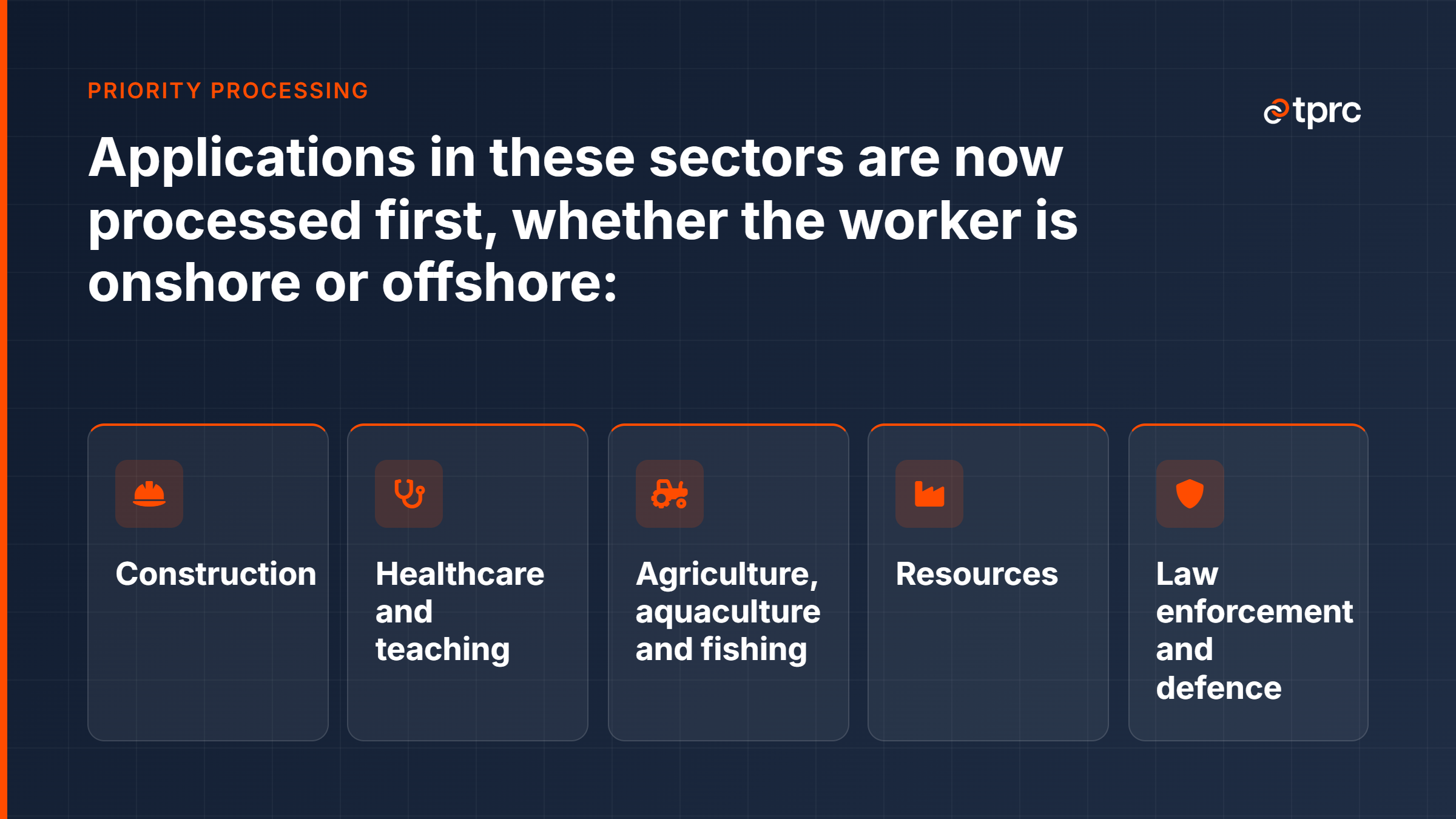
One detail employers miss: priority is based on the nominated occupation and the nature of the role, not the job title on your ad. A fitter in general manufacturing, for example, doesn't automatically qualify (Roam Migration Law). Nominations themselves are not prioritised, so a complete, well-prepared nomination is the part you control.
3. A higher salary floor
From 1 July 2026, the Core Skills Income Threshold for new nominations rose from $76,515 to $79,423. The Specialist Skills Income Threshold rose to $146,576 (EIG). Nominations lodged before 1 July aren't affected.
What hasn't changed: the skills shortage
The shortage has eased slightly, but it's still concentrated in the trades.
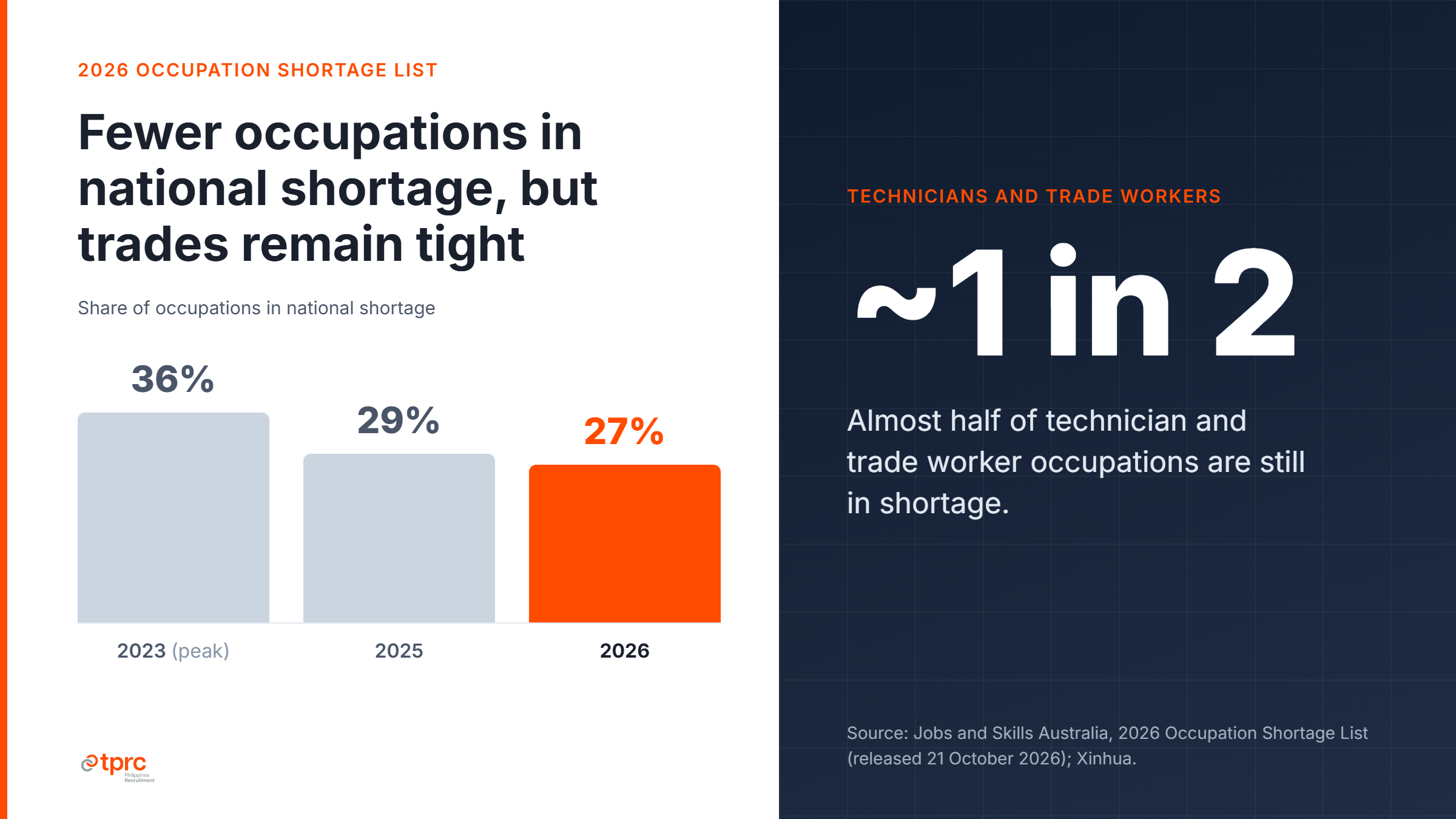
Jobs and Skills Australia's 2026 Occupation Shortage List, released on 21 October 2026, found 27% of occupations in national shortage, down from 29% in 2025 and a peak of 36% in 2023. But almost half of technician and trade worker occupations are still in shortage (Xinhua).
This year's list also separates three causes of shortage: not enough people coming through training, a lack of suitable applicants, and people not staying in the role. That matters, because each one needs a different fix. For a closer look at which roles are under pressure, see What Skilled Workers Does Australia Need Most?
Overall migration is still being brought down. Home Affairs forecasts net overseas migration of 245,000 this financial year and 225,000 in 2027–28.
So the system is tighter overall, while permanent employer sponsorship and the named priority sectors get more room.
Our take: timing is the bigger risk
For most businesses, the policy isn't what causes the problem. Timing is.
In our experience, the employers who struggle are the ones who start looking for a skilled worker once the role is already urgent. By then the project dates are locked in, they're competing for the same small local pool, and the pressure lands on the team they already have. We see what that does to projects in The Impact of Skilled Shortages on Business Growth.
A sponsored hire still needs time for the nomination, the visa and relocation. Nobody can compress that, and this year's changes to processing priorities show the queue itself can move at short notice.
The businesses that get this right treat international recruitment as one part of their workforce plan, alongside local hiring, apprentices and upskilling. It supplements the local workforce. It isn't an emergency button, and it doesn't replace Australian workers. Our guide to building a more sustainable workforce through skilled migration goes further into how that mix works, and Top 5 Mistakes Employers Make When Hiring Overseas Talent covers where it tends to go wrong.
What employers should do now
Start with the roles you know you'll need, then work back from the date you need people on site.
- Check whether your key roles sit in a priority sector. Look at the nominated occupation and what the role actually involves, not the job title.
- Budget for the current salary threshold now. Build $79,423 (or higher, where market rates apply) into your planning before you get to nomination stage.
- Map the skilled roles you'll need in the next 12 to 18 months. Our Workforce Assessment tool is a quick way to start.
- Start sourcing before the role is urgent. Give yourself time to assess skills and experience properly, not just fill a seat.
- Get your sponsorship in order. If you haven't sponsored before, Standard Business Sponsorship is the first step.
- Get advice before you lodge. Processing priorities have already changed twice since July. Talk to a registered migration agent or lawyer andand see our Work Visas & Migration page for how we support the process.
If construction or manufacturing is your sector, How Can Overseas Talent Solve Construction & Manufacturing Shortages? and Overseas Recruitment for Construction are good next reads.
Frequently asked questions
Can Australian employers still sponsor skilled overseas workers in 2026?
Yes. Permanent employer-sponsored (subclass 186) places increased from 44,000 in 2025–26 to 58,040 in 2026–27, and temporary sponsorship through the Skills in Demand (subclass 482) visa remains available.
Which industries get priority visa processing in Australia?
Under Ministerial Directions 121 and 122, in force from 19 September 2026, priority goes to construction, healthcare, teaching, agriculture, aquaculture, fishing, resources, and law enforcement and defence. Priority depends on the nominated occupation and the nature of the role.
What is the minimum salary for sponsoring a skilled worker from July 2026?
For new nominations lodged from 1 July 2026, the Core Skills Income Threshold is $79,423. The Specialist Skills Income Threshold is $146,576.
How long does it take to sponsor a skilled worker?
It varies by visa, occupation, priority group and where the applicant is. Home Affairs publishes processing priorities and guidance on processing skilled visas. Plan for nomination, visa and relocation time before the role becomes urgent.
The real question
The settings will keep moving. The skills gap won't close anytime soon. So the question for your business isn't whether you can still sponsor. It's whether you'll start early enough for it to make a difference.
If you'd like to talk through the skilled roles your business is likely to need, contact the TPRC team or call 1300 266 290. You can also see how other employers have approached it in our case studies.