
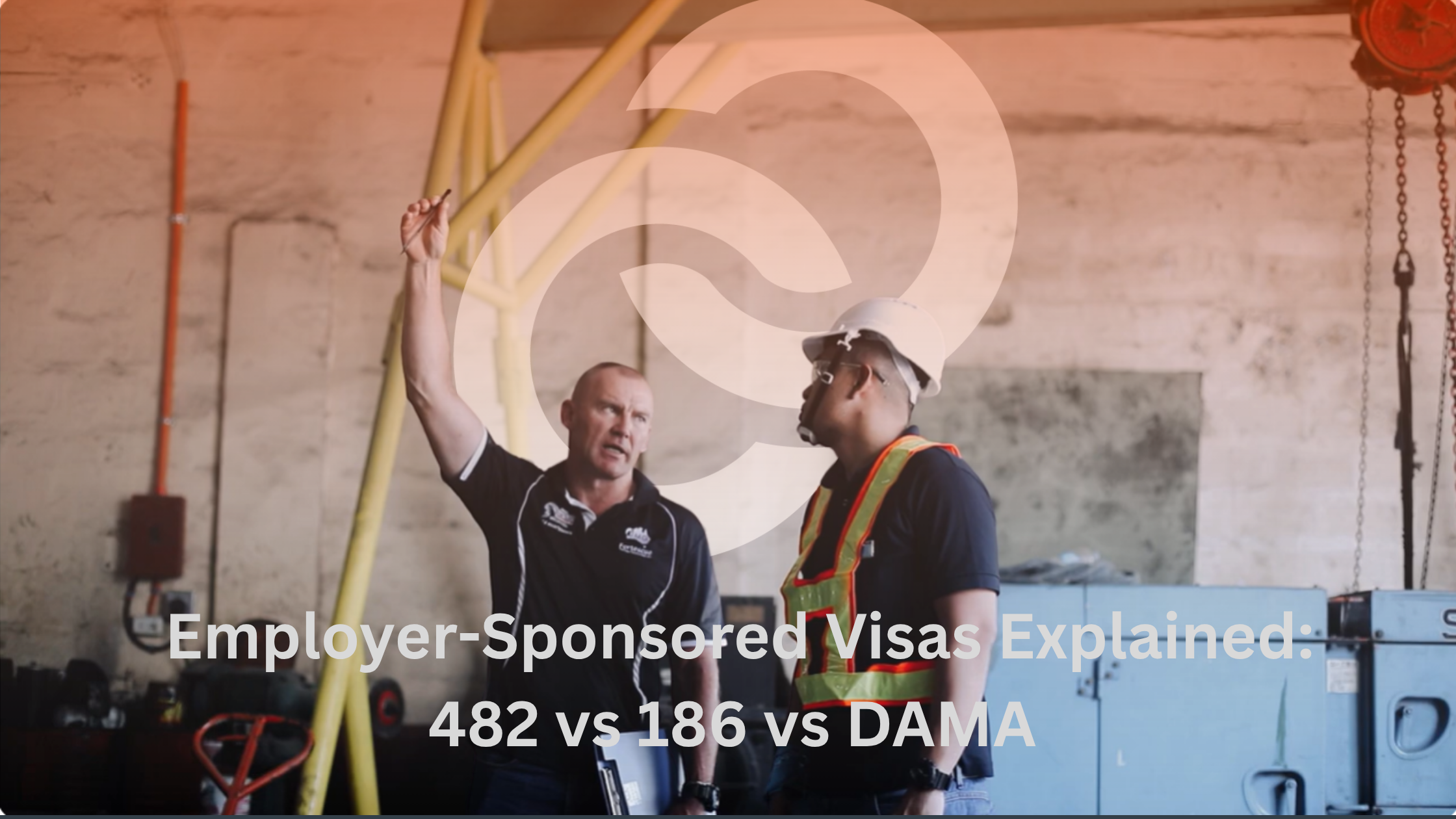
Australia's skills shortage continues to bite across construction, manufacturing, mining, healthcare, and engineering. As local candidates get harder to find, employer-sponsored visas have become one of the most effective ways to access skilled international talent.
The three pathways employers encounter most are the Subclass 482 visa, the Subclass 186 visa, and Designated Area Migration Agreements (DAMA). Each helps address workforce shortages, but they serve different purposes and suit different business needs.
How employer sponsorship works
These visas let Australian businesses recruit overseas workers when suitably qualified locals can't be found. They're built to support industries facing labour shortages while keeping businesses productive — and for many employers, overseas recruitment is now a core part of long-term planning, not a stopgap.
Subclass 482: filling immediate gaps
The Subclass 482 Skills in Demand visa helps employers fill skill shortages when local talent is unavailable. Depending on the occupation and stream, workers can stay up to four years. It's often the fastest way to secure skilled workers and keep projects moving, and it's widely used in construction, manufacturing, engineering, hospitality, and healthcare. Many 482 workers later become eligible for permanent residency via the 186 — which makes it attractive to employers and employees alike.
Subclass 186: a direct path to permanent residency
Unlike the 482, the Subclass 186 Employer Nomination Scheme grants permanent residency on approval — making it the choice for employers who want long-term stability. It suits highly skilled workers a business wants to keep permanently, and can be reached through direct entry or by transitioning from a 482. For businesses facing ongoing shortages, permanent staff mean lower turnover and more certainty when planning ahead.
DAMA: built for regional employers
A Designated Area Migration Agreement helps regional employers fill roles that standard visas can't reach. DAMAs open up additional occupations and may offer concessions on age, English, work experience, and salary thresholds — particularly valuable for businesses in remote or hard-to-fill locations. They're commonly used in agriculture, hospitality, mining, transport, aged care, and regional construction, giving employers outside the major cities access to a far broader talent pool.
Which one is right for you?
- 482 — best when you need skilled workers quickly to cover an immediate shortage.
- 186 — best when you want long-term stability through permanent residency.
- DAMA — best for regional employers facing chronic shortages who need extra flexibility.
Why skilled migration keeps growing
Australia's workforce pressures aren't easing soon. Construction, manufacturing, healthcare, mining, and infrastructure are all competing for the same limited pool of skilled workers, and that's driving steady demand for overseas talent. Filipino tradespeople, technicians, and engineers are already helping Australian businesses meet that demand and keep projects on track.
The bottom line
Whether you need immediate support, a path to permanent employment, or regional concessions, employer-sponsored visas offer a practical answer to ongoing labour shortages. Knowing the difference between the 482, 186, and DAMA is the first step.